

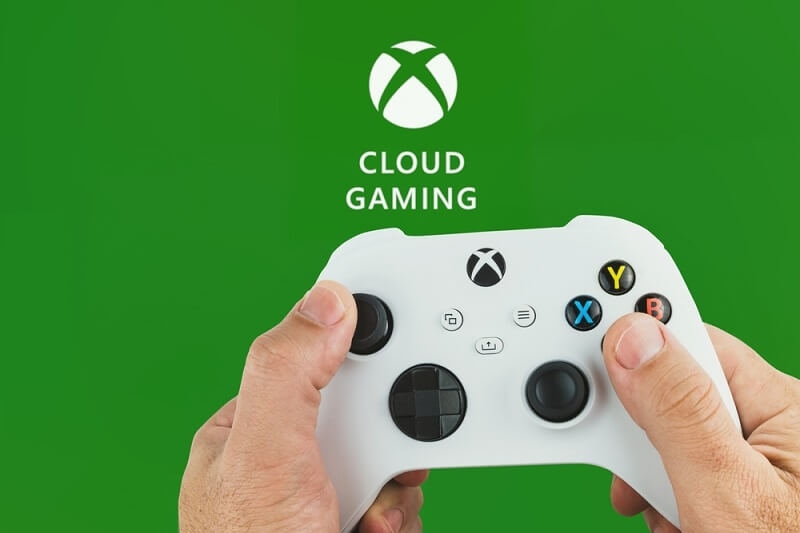
Gaming in 2026 feels different. Not just faster or prettier, but lighter. You no longer need a bulky box under your TV humming like a mini jet engine. Instead, you click an app, grab a controller, and jump straight into the action. That shift is powered by cloud gaming platforms, and they’re quietly rewriting how Americans play. In this blog, we’ll look at why consoles are losing ground, how low-latency game streaming finally works well enough, how cloud gaming vs console gaming compares in real life, and what services like NVIDIA GeForce NOW and Xbox Cloud Gaming are doing to win over players across the USA.
Gaming used to mean hardware loyalty. You picked a console and stuck with it for years. Now, cloud gaming platforms are turning that model upside down. Instead of buying a machine, you’re subscribing to access.
Here’s the thing. Consoles were once the gateway. No console, no game. But in 2026, your phone, smart TV, Chromebook, or even an older laptop can run high-end titles through the cloud.
Game processing happens in powerful data centers across the country. The graphics card might be an NVIDIA A100 or a custom server GPU similar to RTX 4080-class hardware. You don’t see it. You just see the result on your screen.
That changes everything.
Instead of upgrading every six to seven years, you stream the latest version instantly. No midnight launch lines at Best Buy. No storage anxiety. Just log in and play.
U.S. gamers are practical. If something saves money and works well, it sticks. Cloud gaming platforms offer:
For families, it’s huge. One subscription can support multiple devices. For college students in dorms, it means no heavy console to move. Even frequent travelers can pick up a controller in a hotel room and continue their save file.
Don't Miss: Top Cross-Platform Games: Seamless Play Across Devices
This debate is everywhere. Reddit threads, YouTube reviews, group chats during football season. Cloud gaming vs console gaming is not just technical. It’s emotional.
Consoles still have an edge in raw consistency. A PlayStation 5 or Xbox Series X connected to a 4K OLED TV can deliver stable 4K at 60 fps without relying on internet conditions.
Cloud gaming, however, has caught up fast. Many services stream at 1080p 60 fps by default, with premium tiers offering 1440p or 4K streaming. For example, GeForce NOW Ultimate streams with RTX 4080-class performance and supports DLSS 3.
Console gaming feels tangible. You buy the console. You own the disc or digital copy.
Cloud gaming is subscription-driven. You pay monthly. Some players dislike that. It feels temporary.
Latency used to be the deal breaker. Press a button, wait a fraction of a second, and your character jumps late. That tiny delay ruined competitive shooters.
In 2026, low-latency game streaming will be far better.
Companies now use edge computing. That means servers are physically closer to players. Instead of sending your input across the country, it might only travel a few hundred miles.
Providers place data centers in major U.S. regions, such as:
This reduces ping times significantly. Many players report latency under 20 milliseconds on strong connections.
Modern streaming adjusts quality in real time. If bandwidth drops, resolution scales down slightly instead of freezing the game.
Think of it like YouTube auto-adjusting from 4K to 1080p. You might not even notice during fast action.
Also Read: Big Changes Ahead Mobile Gaming Trends 2025 You Should Know
Now let’s talk real platforms. Because theory is nice, but performance matters.
NVIDIA GeForce NOW has become one of the best cloud gaming services that USA gamers rely on. The Ultimate tier runs on RTX 4080-level GPUs in the cloud. Yes, really.
Players can stream games they already own from Steam or Epic Games. That’s a big plus. It doesn’t force you into a closed ecosystem.
From this NVIDIA GeForce NOW review perspective, strengths include:
Weaknesses? Queue times on free tiers and reliance on publisher support. Some titles rotate out.
Microsoft has pushed hard into cloud integration through Game Pass Ultimate. Xbox Cloud Gaming performance has improved year over year.
It streams directly from Xbox Series X-based servers. That means console-level quality without owning the box.
Strengths include:
Latency in competitive shooters like Halo Infinite feels responsive on strong WiFi 6 networks. Casual games run almost flawlessly.
Let’s talk money. Consoles cost around $499 at launch. Add games at $70 each. Add accessories. Suddenly, you’re deep in.
Cloud gaming platforms flip that math.
Most services range from $10 to $20 per month. That’s similar to Netflix or Hulu.
Over five years, subscriptions can add up. But so do hardware upgrades. A gaming PC with an RTX 4070 or 4080 is not cheap. Not even close.
For many American households managing rising living costs, predictable monthly payments feel easier than a large upfront purchase.
This might be the real game-changer. You start playing on your Samsung QN90C smart TV in the living room. Later, you continue on your iPad Pro in bed.
Same save file. Same progress.
Traveling for Thanksgiving? Bring a controller. Log in at your cousin’s house. It sounds small, but it shifts gaming from a location-based hobby to a fluid one.
Cloud gaming platforms are not a passing trend in 2026. They’re a structural shift in how Americans access entertainment. With stronger broadband networks, improved low-latency game streaming, and powerful services like NVIDIA GeForce NOW and Xbox Cloud Gaming, the gap between streaming and hardware keeps shrinking.
Cloud gaming vs console gaming is no longer a simple quality debate. It’s about lifestyle, cost, and flexibility. For many players across the USA, convenience and access are outweighing physical ownership.
For most casual and mid-core players, yes. Performance is strong on good internet, and flexibility makes it appealing.
At least 25 to 50 Mbps for stable 1080p streaming. Faster speeds improve quality and reduce lag.
If you already own PC games and want high performance without buying new hardware, it’s a solid choice.
On strong WiFi or wired broadband, it feels smooth and responsive, especially for Game Pass titles.
This content was created by AI